The Steel House India is a leading manufacturer and stockist of ASTM A276 / A479 Stainless Steel 304H Round Bars in India. Based in Mumbai, Maharashtra, we maintain one of the largest ready-to-ship inventories of Stainless Steel 304H Round Bars in India. These round bars are specifically engineered and thermal-treated for deployment in elevated-temperature structural frameworks, pressure vessels, petrochemical processing lines, and industrial boiler systems.
We cater directly to heavy industry procurement managers, commercial machine shops, and international engineering contractors. Our active stock lines span an extensive dimensional spectrum, ranging from micro-precision 2mm bright cold-drawn wire up to heavy-forged 500mm centerless ground industrial shafts. Sourced from premium, VOD/AOD refined billets, our inventory of authenticated SS 304H solid rods is available starting from a competitive baseline wholesale rate of ₹180/Kg.
📊Get a Real-Time Quote: Because industrial alloy pricing is closely tied to daily global market fluctuations of raw nickel, chromium, and scrap surcharges, final commercial invoices adjust dynamically based on total order tonnage, custom cut-to-length machine processing, and specialized surface polishing metrics. Contact our centralized Mumbai sales desk for today's live, real-time bulk contract pricing.
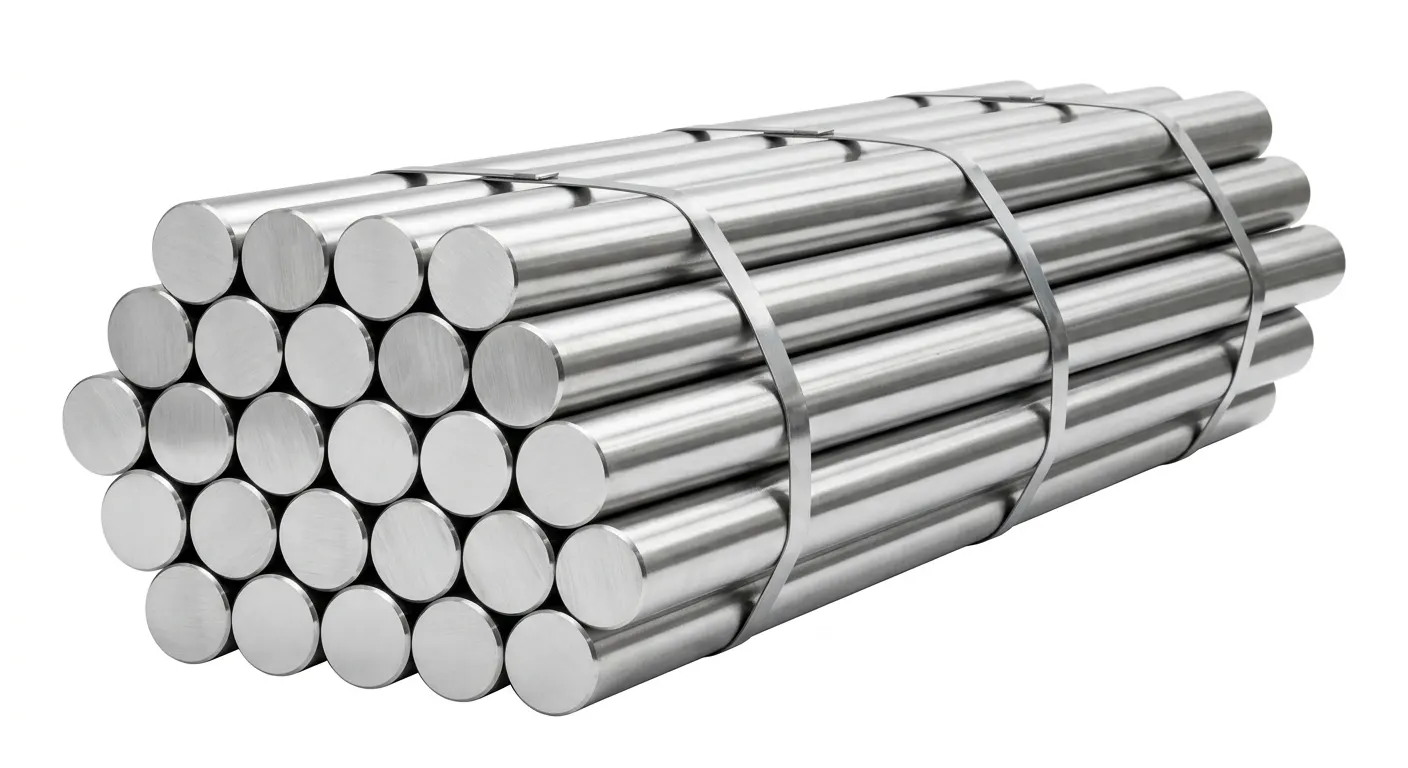
One of the Largest Inventories of Ready-to-Ship SS 304H Round Bars in India
Stringent PMI Testing & Traceable Certification to Eliminate Supply-Chain Risks
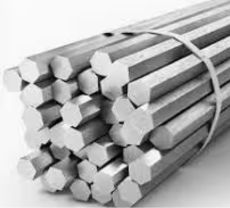
Precision-Engineered 304H Solid Shafts Calibrated for High-Temperature Industrial Operations
Buy Premium Grade 304H Round Bars directly from Mumbai Stockist
When you source your materials from The Steel House India, you bypass third-party trading margins and gain direct access to rapid fulfillment routes. Our central location in Maharashtra enables seamless logistics, allowing us to coordinate fast domestic freight forwarding to major engineering zones and streamlined international shipping through proximate deepwater ports.
Complete Range of Available Surface Finishes
Different engineering and machining layouts require distinct surface topologies to interface correctly with seals, bearings, or structural weldments. We offer five specialized finishes across our entire 304H round bar inventory:
■ Cold Drawn (Bright Finish):
Features sharp dimensional accuracy and a smooth, reflective surface
finish. Excellent for direct loading into automatic CNC 3-jaw chucks or
collets, minimizing setup times for mass production.
■ Centerless Ground & Polished:
Engineered for micro-precision applications, providing exceptionally
tight h8 or h9 diameter tolerances and removing all surface
decarburization layers.
■ Rough Peeled / Smooth Turned:
Typically utilized for heavy-diameter forged shafts where the outer skin
is stripped to reveal a sound metallurgical core, ready for secondary
forging or heavy machining.
■ Black Hot Rolled:
Supplied directly from the mill after hot rolling and descaling. Best
suited for basic structural fabrication where secondary machining or
high-aesthetic finishes are not immediately required.
Why Industrial Procurement Teams Trust The Steel House India
Procuring critical high-temperature alloys demands a supplier capable of
backing physical material claims with verifiable processing
infrastructure. The Steel House India eliminates supply-chain risks for
your facility through three rigid quality evaluation metrics:
1 Positive Material Identification (PMI):
Our internal quality control desk subjects every single incoming and
outgoing production batch to handheld PMI spectrometer testing. This
step guarantees that carbon, chromium, manganese, and nickel
distributions match international parameters prior to dispatch,
protecting your tools from unexpected material hard spots.
2 EN 10204 3.1 Traceability Compliance:
Every delivery from our warehouse facility is accompanied by authentic
Mill Test Certificates (MTC). This standard documentation provides full
trace-history transparency back to the original furnace heat number,
specifying exact chemical analysis breakdowns, raw mechanical elongation
thresholds, and non-destructive ultrasonic testing outcomes.
3 Heavy Freight Transit Protection:
Because cold-drawn and ground rods feature precise surface finishes
required for exact machining clearances, they are highly vulnerable to
surface dings and transit scratches during freight forwarding. Our
dedicated Mumbai logistics desk ensures that bars are bundled
face-to-face to prevent friction, wrapped tightly in moisture-resistant
HDPE plastic, and secured in rigid wooden crates or steel-banded
pallets.
High-Temperature Metallurgy: When to Choose Grade 304H
Specifying the correct material variant is a critical safety parameter when structural industrial operations exceed standard ambient room temperatures. While general variants are highly efficient for basic atmospheric corrosion resistance, they lack the microstructural stability required for sustained heat exposure. Grade 304H is explicitly engineered to bridge this gap through a distinct, tightly regulated chemical formulation.
The Controlled High-Carbon Threshold
The defining difference between these materials lies entirely within the carbon concentration envelope. While standard grade 304 allows broad carbon levels up to a maximum of 0.08%, and the low-carbon 304L variant strictly restricts carbon to a 0.03% maximum to eliminate carbide precipitation during welding, Grade 304H mandates a controlled carbon range of 0.04% to 0.10%.
Creep and Stress-Rupture Resistance
This elevated carbon content provides greater short-term and long-term creep strength. When structural metals operate at continuous temperatures exceeding 525°C and scaling up to 800°C, lower-carbon variations experience rapid mechanical sagging, microstructural voiding, and premature stress-rupture cracking under continuous structural loads. The high-carbon matrix of 304H alters the crystal lattice, resisting thermal slip and preserving geometric stability under extreme thermal pressure.
Grain Structure Optimization
Sourced from premier melt furnaces, our solid bars undergo complete solution-annealing treatments at 1040°C to 1110°C followed by rapid water quenching. This processing stabilizes the austenitic grain boundaries, ensuring that the bars retain their high-temperature mechanical strengths and excellent structural toughness throughout prolonged thermal cycles.
Technical Specifications & Sizing Profile
The reference tables below outline the structural metrics, composition limits, and physical properties adhered to by The Steel House India for all high-carbon variations.
1. Manufacturing Scope and Standard Compliance
| Parameter | Details |
|---|---|
| Material Specifications | ASTM A276, ASTM A479, ASME SA276, ASME SA479 |
| International Standards | EN, DIN, JIS, ASTM, BS, ASME, AISI, IS, GOST |
| Diameter Sizing Range | 2mm to 500mm (Metric & Imperial Sizing Available) |
| Dimensional Tolerances | h8, h9, h10, h11, h12 (Conforming to DIN 671 / ASTM A484) |
| Value-Added Processing | CNC Band-saw Cutting, Centerless Grinding, Edge Chamfering, Straightening |
2. Chemical Composition Limits (% by Weight)
| Element | Composition Limit |
|---|---|
| Carbon (C) | 0.04 - 0.10% |
| Nickel (Ni) | 8.00 - 10.50% |
| Chromium (Cr) | 18.00 - 20.00% |
| Manganese (Mn) | 2.00% max |
| Silicon (Si) | 0.75% max |
| Sulfur (S) | 0.030% max |
| Phosphorus (P) | 0.045% max |
| Iron (Fe) | Balance |
3. Mechanical Property Profile
| Mechanical Property | Value |
|---|---|
| Ultimate Tensile Strength | 75,000 psi (515 MPa) |
| Yield Strength (0.2% Offset) | 30,000 psi (205 MPa) |
| Elongation | 40% Minimum (in 50mm) |
| Brinell Hardness (HB) | 192 Maximum |
| Rockwell Hardness (HRB) | 92 Maximum |
Sizing Matrix & Theoretical Weight Reference Formula
To determine the precise theoretical mass of a stainless steel solid
round bar per linear meter for logistics planning, ocean freight
container loading, and site material handling, engineers utilize the
following geometric constant formula:
$$\text{Diameter (mm)} \times \text{Diameter (mm)} \times 0.00623 =
\text{Weight in Kilograms per Meter (Kg/m)}$$
High-Demand Stock Sizing and Weight Chart
| Diameter Sizing (mm) | Theoretical Weight (Kg/m) | Diameter Sizing (mm) | Theoretical Weight (Kg/m) |
|---|---|---|---|
| 6 mm | 0.22 Kg/m | 28 mm | 4.88 Kg/m |
| 8 mm | 0.40 Kg/m | 32 mm | 6.38 Kg/m |
| 10 mm | 0.62 Kg/m | 36 mm | 8.07 Kg/m |
| 12 mm | 0.90 Kg/m | 40 mm | 9.97 Kg/m |
| 14 mm | 1.22 Kg/m | 45 mm | 12.62 Kg/m |
| 16 mm | 1.60 Kg/m | 50 mm | 15.58 Kg/m |
| 18 mm | 2.02 Kg/m | 60 mm | 22.43 Kg/m |
| 20 mm | 2.49 Kg/m | 65 mm | 26.32 Kg/m |
| 22 mm | 3.02 Kg/m | 75 mm | 35.04 Kg/m |
| 25 mm | 3.89 Kg/m | 100 mm | 62.30 Kg/m |
Strategic Applications Across Industrial Sectors
■ Power Generation Infrastructure:
Extensively specified for high-pressure boiler tubes, superheater
headers, steam headers, thermal exhaust systems, and heat exchanger
frames running at continuous high temperatures.
■ Petrochemical & Refining Plants:
Utilized to manufacture crack-resistant thermal crackers, high-pressure
mixing rods, refining columns, and fluid processing manifolds.
■ Hygienic System Integration:
Machined into heavy-duty valve components, specialized fluid couplings,
high-temperature flanges, and complex internal fittings used in hygienic
and process piping systems to maintain complete system fluid safety
under thermal stress.
Frequently Asked Questions (FAQ)
Can I substitute grade 304H with standard grade 304 or low-carbon 304L round bars if 304H is out of stock?
It depends entirely on your system's operational temperature profile. If your application consistently operates below 525°C, standard variations are perfectly acceptable alternatives. However, if your engineering design operates at elevated high-temperature ranges, replacing 304H with a lower carbon variant is unsafe. The lower carbon content lacks the necessary creep resistance, which can lead to structural sagging, microstructural deformation, or premature stress-rupture cracking under thermal load.
Do your SS 304H round bars come with original mill certification documentation?
Yes. Every single order dispatched from our centralized Mumbai warehouse is accompanied by a genuine EN 10204 3.1 Mill Test Certificate. This document contains verifiable proof of chemical testing, mechanical yield strengths, ultimate tensile strengths, elongation percentages, and hardness data matching the specific heat number stamped on your delivered materials.
Can you supply custom cut-to-length block pieces, or must I order standard lengths?
While our standard warehouse inventory lines are stored in factory lengths of 3 to 6 meters, our Mumbai processing hub features automatic band-saw machinery. We can easily provide precise, cut-to-length round bar blocks according to your exact blueprint drawings to eliminate raw material wastage and machining cycle times at your manufacturing facility.
Request a Callback from Our Sourcing Desk
This commercial product page is managed and continuously updated by the sales and distribution division at The Steel House India. Leveraging more than three decades (30+ years) of industrial supply, logistical execution, and engineering partnerships within the Indian metal markets, we guarantee that all commercial quotes, dimensional options, and raw material parameters perfectly align with active global standards (ASTM, ASME, and ISO).
■ Corporate Office & Primary Warehouse Infrastructure: Madhavbaug, Mumbai, Maharashtra, India
■ Primary Sourcing and RFQ Desk: sales@steelhouseindia.com
■ Technical Consulting Services: Available upon formal RFQ submission.