The Steel House India is a trusted manufacturer, stockholder, and global exporter of ASTM A276 / ASTM A479 AISI 420 Stainless Steel Round Bars from Mumbai, India. Grade 420 (UNS S42000 / WNR 1.4021) is a hardenable martensitic stainless steel with high chromium content, engineered for superior hardness, wear resistance, and edge retention after heat treatment. It is widely used in surgical instruments, industrial blades, pump shafts, and high-stress mechanical components requiring durability and precision performance under abrasive conditions.
Our supply range includes 3mm precision bars to 500mm+ forged shafts, all sourced from VOD/AOD refined billets with full traceability. For applications requiring improved corrosion resistance and stable performance in moderately elevated temperatures, explore our ASTM A276 AISI 321 Stainless Steel Round Bars. We ensure competitive pricing, consistent quality, and reliable global supply for critical engineering requirements.
Starting Price: ₹160 – ₹320/Kg (subject to current market rates, size, and quantity).
📊 Request an Instant Commercial Quote: Metal market pricing fluctuates based on daily raw chromium and alloy surcharges. Our commercial team adapts quotes dynamically to offer you the best value based on order tonnage and custom processing requirements. Contact our Mumbai sales office today for a real-time bulk contract quotation.
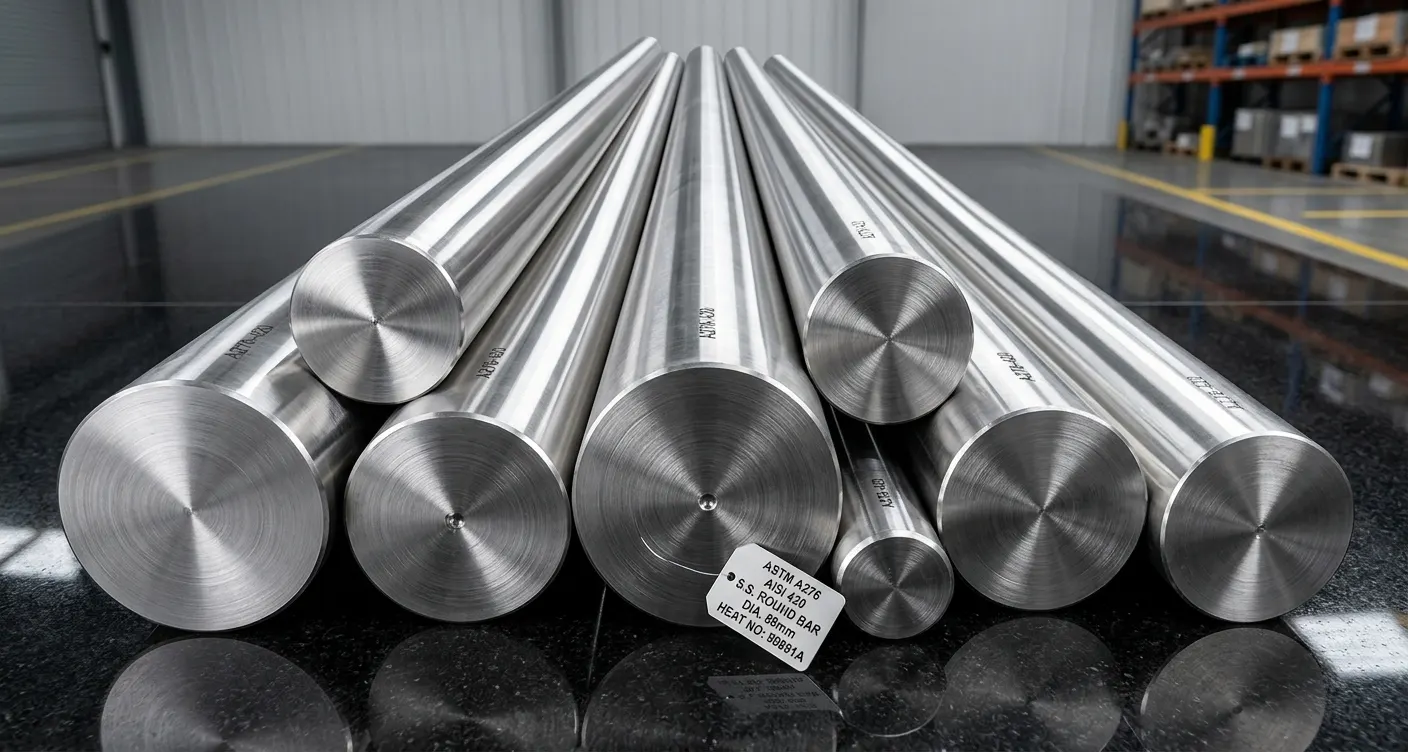
AISI 420 Bars
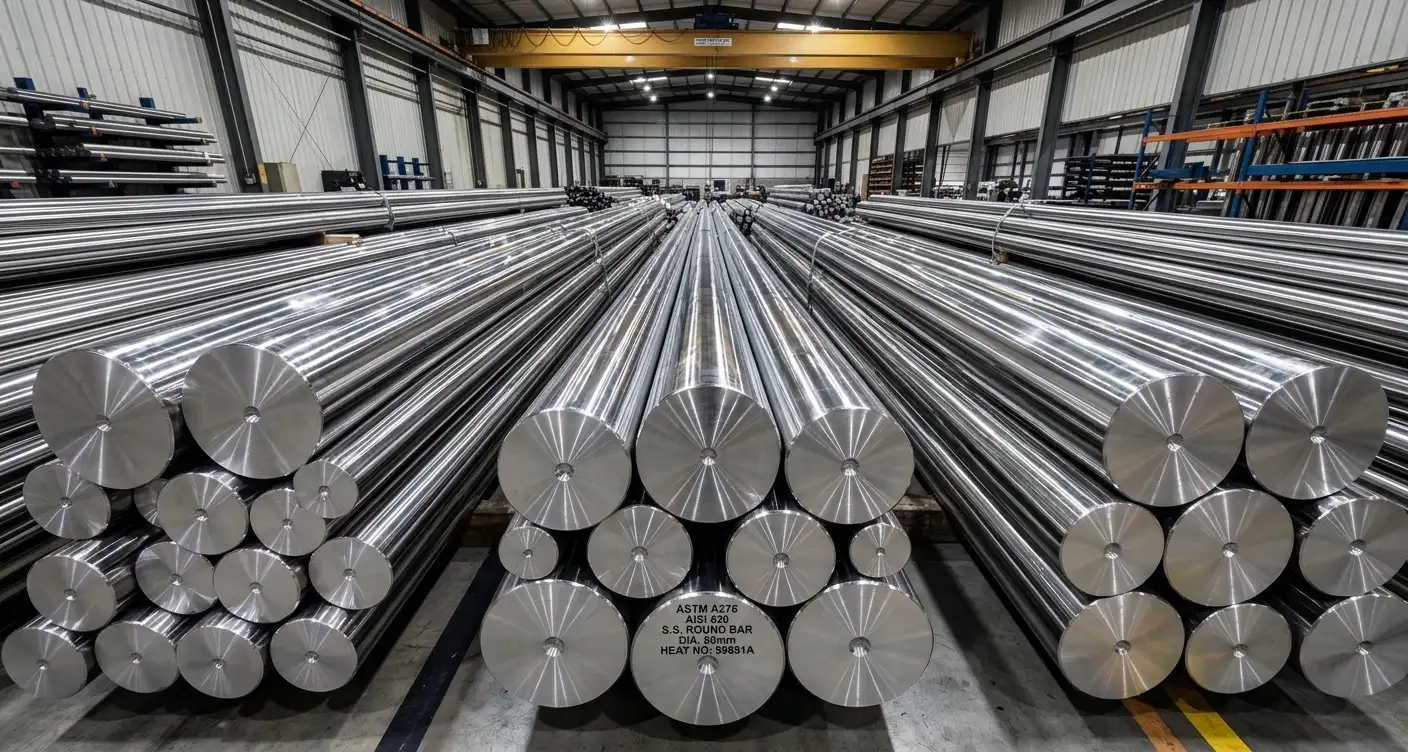
Precision 420 Rounds
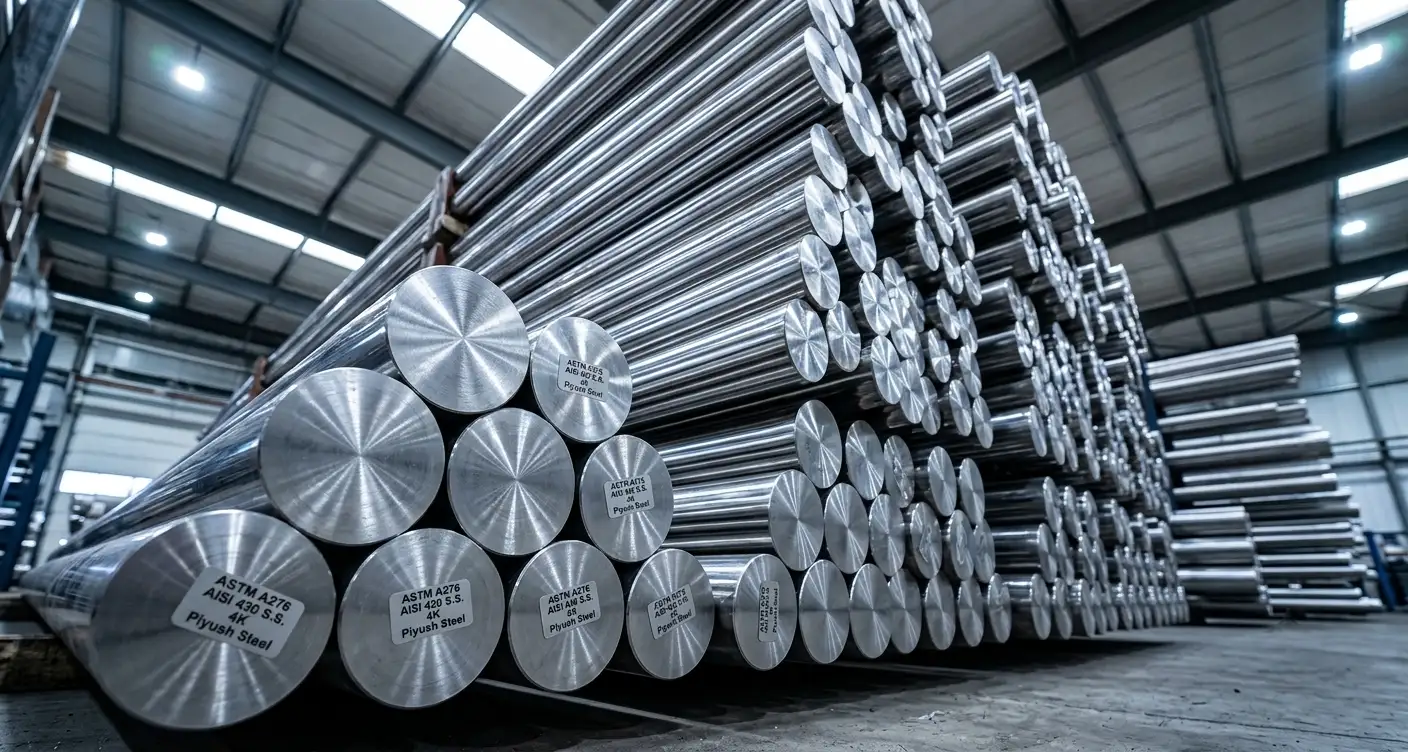
Mumbai Stockyard 420
Buy Premium AISI 420 Solid Rods Directly from Mumbai Stockyard
By sourcing directly from The Steel House India, you bypass middle-tier trading margins and gain direct access to fast fulfillment paths. Our strategic location in Maharashtra enables us to coordinate rapid domestic shipping across India's core industrial corridors—including Pune, Ahmedabad, Chennai, Delhi, and Bangalore—and ensures streamlined international export via major deepwater ports.
Complete Range of Available Surface Finishes
We offer varied surface topologies to ensure your material integrates seamlessly into your manufacturing process:
■ Cold Drawn (Bright Finish):
High dimensional accuracy and a smooth, reflective surface; ideal for
high-speed CNC automated machining.
■ Centerless Ground & Polished:
Provides tight tolerances and removes decarburized layers for uniform
hardness across the entire cross-section.
■ Rough Peeled / Smooth Turned:
Best for heavy-diameter forged shafts requiring secondary machining or
deeper structural reprocessing.
■ Black Hot Rolled:
Cost-effective for basic components where secondary finishing is not
required.
Why Engineering Procurement Teams Trust The Steel House India
We eliminate supply-chain risks through three rigid quality evaluation
metrics:
1. Positive Material Identification (PMI):
Every batch is subjected to handheld PMI spectrometer testing to verify
carbon and chromium content, ensuring consistent heat-treatment response.
2. EN 10204 3.1 Traceability:
Every shipment is accompanied by a Mill Test Certificate (MTC) providing
full history back to the original furnace heat number.
3. Heavy Freight Transit Protection:
Bars are bundled face-to-face, wrapped in moisture-resistant HDPE, and
secured in rigid crates to prevent surface friction and transit damage.
Technical Specifications & Grade Profile
1. Manufacturing Scope
| Manufacturing Feature | Operational Parameter |
|---|---|
| Material Specs | ASTM A276, ASTM A479, ASME SA276 |
| Diameter Range | 3mm to 500mm |
| Dimensional Tolerances | h8–h12 / k9–k12 (Per ASTM A484) |
2. Chemical Composition Limits (% by Weight)
| Element | Certified Value Limit (AISI 416) |
|---|---|
| Chromium (Cr) | 12.00 – 14.00% |
| Carbon (C) | 0.15% Max |
| Manganese (Mn) | 1.25% Max |
| Sulfur (S) | 0.15% Min |
| Silicon (Si) | 1.00% Max |
| Phosphorus (P) | 0.06% Max |
| Iron (Fe) | Balance |
3. Mechanical Profile
| Mechanical Property | Typical Value / Range | Condition / Remark |
|---|---|---|
| Ultimate Tensile Strength | 500 – 850 MPa | Depending on Heat Treatment |
| Yield Strength (0.2% Offset) | 275 – 600 MPa | Depending on Heat Treatment |
| Elongation (in 50mm) | 15% – 25% | Annealed Condition |
| Hardness | Up to 50 HRC | After Hardening & Tempering |
| Melting Point | 1480°C – 1530°C | — |
| Density | 7.75 g/cm³ | — |
Comparative Analysis: AISI 420 vs. AISI 321 vs. AISI 347 Stainless Steel Round Bars
Selecting the appropriate stainless steel grade depends on whether your application prioritizes hardness, wear resistance, elevated-temperature performance, or weld stability. While AISI 420 is a martensitic grade designed for high hardness and abrasion resistance, AISI 321 and AISI 347 are stabilized austenitic grades developed for long-term service in high-temperature environments.
| Feature | AISI 420 Stainless Steel Round Bars | AISI 321 Stainless Steel Round Bars | AISI 347 Stainless Steel Round Bars |
|---|---|---|---|
| Stainless Steel Family | Martensitic | Titanium-Stabilized Austenitic | Niobium-Stabilized Austenitic |
| UNS Designation | S42000 | S32100 | S34700 |
| Primary Advantage | High Hardness & Wear Resistance | Excellent Heat Resistance & Weld Stability | Enhanced High-Temperature Strength & Creep Resistance |
| Heat Treatment | Fully Hardenable | Not Hardenable | Not Hardenable |
| Hardness Potential | Very High | Moderate | Moderate |
| Corrosion Resistance | Moderate | Good | Excellent at Elevated Temperatures |
| Intergranular Corrosion Resistance | Moderate | Excellent | Excellent |
| Continuous Service Temperature | Up to 650°C | Up to 900°C | Up to 925°C |
| Magnetic Properties | Magnetic | Non-Magnetic | Non-Magnetic |
| Weldability | Fair | Excellent | Excellent |
| Typical Industries | Tool Manufacturing, Pumps, Valves, Surgical Instruments | Heat Exchangers, Exhaust Systems, Furnace Components | Refineries, Petrochemical Plants, Power Generation Equipment |
| Best Suited For | Wear-Intensive Mechanical Components | High-Temperature Welded Structures | Severe High-Temperature Industrial Service |
Grade Selection Guide
Choose AISI 420 Stainless Steel Round Bars when maximum hardness,
edge retention, and wear resistance are the primary requirements. This grade
is commonly specified for blades, shafts, valves, surgical instruments, and
mechanical components subjected to friction and abrasion.
For welded equipment operating at elevated temperatures, AISI 321
Stainless Steel Round Bars provide excellent resistance to
carbide precipitation through titanium stabilization, making them suitable
for furnace parts, expansion joints, and thermal processing systems.
Where applications involve prolonged exposure to high temperatures and
demanding refinery or petrochemical environments, AISI 347
Stainless Steel Round Bars offer superior creep strength and
long-term structural stability due to niobium stabilization, making them a
preferred choice for critical process equipment.
Frequently Asked Questions (FAQ)
1. What is the primary advantage of AISI 420 over lower-grade martensitic steels?
AISI 420 is a high-carbon martensitic grade, which allows it to be heat-treated to significantly higher hardness levels (up to 50 HRC) compared to Grade 410. This makes it superior for applications requiring extreme wear resistance, such as industrial cutting blades and high-stress mechanical components.
2. Does AISI 420 require special handling for corrosion resistance?
Yes. While 420 is stainless, its corrosion resistance is optimized only when the surface is properly hardened and polished. In the annealed (soft) state, its corrosion resistance is lower. We recommend post-machining passivation to restore the passive oxide layer and maximize its performance in mild chemical or atmospheric environments.
3. Is AISI 420 suitable for high-temperature applications?
It is not recommended for elevated temperatures above 400°C–450°C. Exceeding its standard tempering temperature can lead to a loss of hardness and a significant reduction in mechanical properties. For high-heat environments, we suggest exploring our AISI 310S or 321 stainless steel grades.
4. Can 420 stainless steel be welded?
Welding 420 is challenging due to its high carbon content, which makes it prone to cracking upon cooling. If welding is required, parts must be pre-heated (150–320°C) and post-weld heat-treated. For structural assemblies where welding is a primary fabrication method, austenitic grades like 304 or 321 are often preferred.
5. Is the material magnetic?
Yes, AISI 420 is strongly magnetic in all conditions (both annealed and hardened). This is a characteristic feature of its martensitic crystalline structure.
6. Do you provide MTC and PMI documentation with 420 round bars?
Yes. Every order is supplied with a comprehensive EN 10204 3.1 Mill Test Certificate (MTC). We also perform rigorous Positive Material Identification (PMI) on all batches to verify that the carbon and chromium content strictly meets your project specifications.
Request a Callback from Our Sourcing Desk
The Steel House India supports domestic and international buyers with comprehensive stainless steel sourcing solutions. To obtain a customized quotation, discuss bulk purchasing requirements, or seek expert guidance on material selection, submit your detailed specifications to sales@steelhouseindia.com. Our technical sales department will assess your project requirements and respond promptly with product availability, pricing, and the most suitable supply options for your application.